










What are the differences between 12V and 24V LED strips?
Many people are know what's theLED Strips and frequently see their application in home decoration, commercial spaces, and furniture. However, when it comes to choosing LED strips, many people are confuse by a basic crucial question—
What's the differences between 12V and 24V LED strips?
Table of Content:
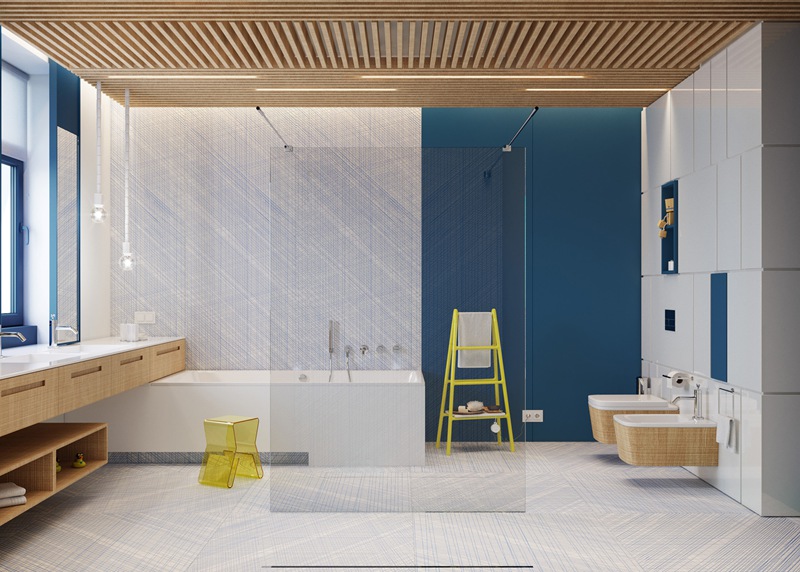
Although both are considered safe low-voltage LED strips, often used in areas where people living spaces or high fire safety requirements. The 12V and 24V LED strips are still clear differences between them in terms of design, effect, and usage scenarios.
Only those who truly understand the circuit structure, illumination performance, and usage limitations,who can choose the right LED strip for their project.
1. Circuit Design: Input Voltage Determines Grouping Structure and Operating Current

LED strips are composed of multiple LED chips connected in FPC.
The higher the supply voltage, the more LEDs chips in parallel branch. The lower the supply voltage, the fewer LEDs chips in parallel branch.
12V LED Strip
●Common configuration: 3 LEDs in series + resistor as a group
●Requires more parallel branches to achieve the power of the entire LED strip
24V LED Strip
●Common configuration: 6 LEDs in series, fewer parallel branches
●At the same power, the current of 24V is only half that of 12V
2. Electrical Performance: voltage drop sign
Voltage drop in LED strips is one of the most common problems in engineering projects.
12V :
● High current → More noticeable voltage drop between the start port and to end
● The strips over 5 meters are brightness decreasing
● Suitable for short distances, like cabinet lighting and furniture lighting
24V :
● Low current, clearly lower voltage drop
● Single-ended power supply allows for cascading distances over (10–15 meters, depending on copper foil width and thickness)
● Suitable for architectural lighting, long distances, and commercial applications

3. Practical application: Stability, efficiency, and installation experience
As a professional lighting designer, the 24V system is generally more suitable for mid-to-high-end linear lighting projects

Ambient LED Strip Effect Demonstration
1)System Stability
● Lower current, lower heat generation, longer lifespan.
● 24V friendly on power supply and wire.
● Performs better on high-power or high-density (e.g., 240–480 LED/m) light strips
2) Luminous Efficacy Consistency
● 24V light strip voltage distribution is more uniform → easier to achieve consistent linear brightness.
● 12V is more easy to show brightness differences, due to voltage step changes (voltage drop) in high-density light strips.
3) Construction and Safety
● Both are safe low voltages.
● 24V is more user-friendly in terms of cable length, wiring, and project fault tolerance.


Ambient LED Strip Effect Demonstration
Conclusion:
Project/Characteristics | 12V | 24V |
Supply Current | Large | Small |
Voltage Drop | Significant | Small |
Single-sided Power Supply Length (Cascaded) | 5m | 10m |
Usage Scenarios | Short distances, such as home cabinets | Commercial spaces, architectural lines, exhibitions, large-area linear lighting |
12V More suitable for short-distance & low-power scenarios: such as cabinets, closets, display cases, and furniture, with installation lengths typically between 1–3 meters.
24V is more suitable for long-distance, commercial lighting, and engineering applications: such as continuous installations of 5–30 meters, ceiling trim, outdoor, hotels, shopping malls, and large-area applications.


